

Member Managed vs Manager Managed LLC: Key Differences
What if one line on a state filing form could determine who controls your business and who gets stuck cleaning up a bad decision made by a partner you barely trust? That line is the member managed vs manager managed LLC choice, and most new business owners breeze right past it.
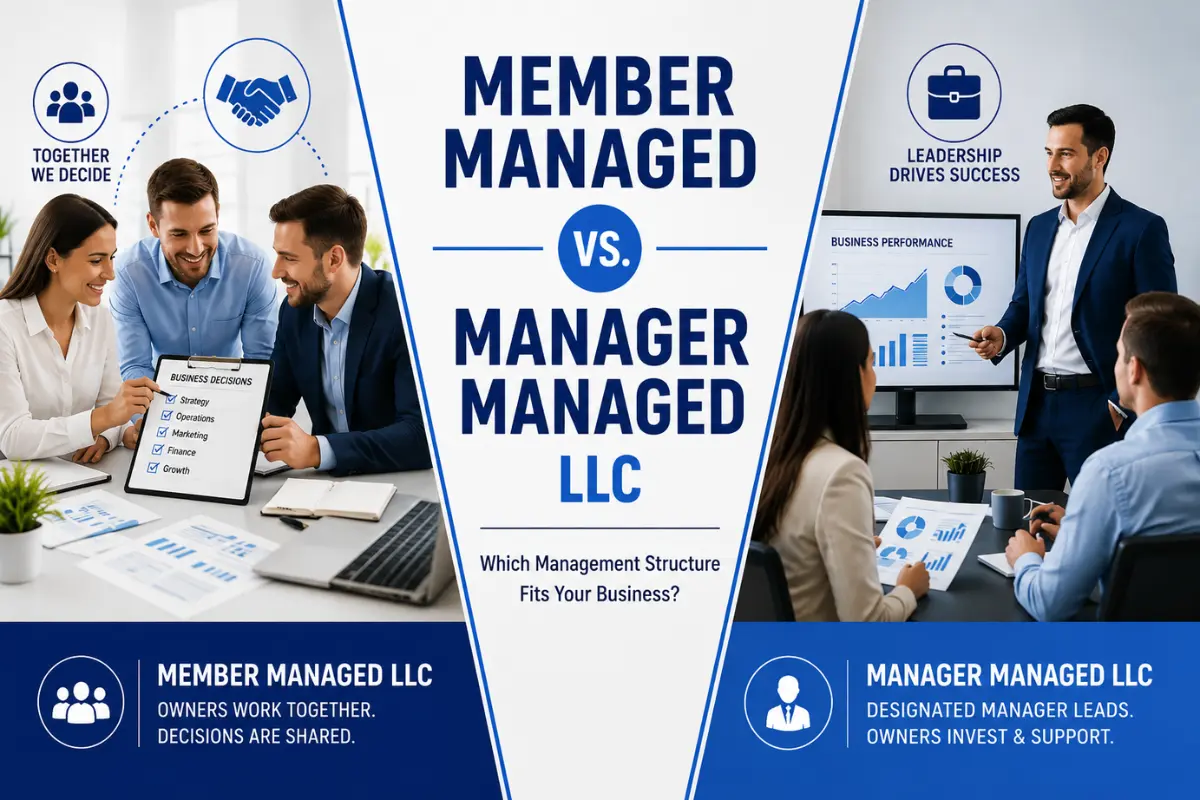
Every LLC picks between two paths: member managed, where the owners run the show together, or manager managed, where owners hand daily control to one or more designated managers. It decides who signs contracts, who opens the business bank account, and who has the final say when opinions differ. DoMyLLC handles LLC formation and filing so business owners can get this right from the start.
If you are still weighing whether an LLC is even the right entity for you, our guide on whether you need an LLC is a good place to start. If you already know an LLC is the way to go, let’s break down the two management structures so you can pick the one that fits your business.
Key Takeaways
- A member-managed LLC allows all owners (members) to participate in the day-to-day management and decision-making of the business.
- A manager-managed LLC gives one or more designated managers the authority to run daily operations, making it a good fit for businesses with passive investors or multiple owners.
- The choice affects management authority—not liability protection or federal taxes. Both structures provide the same limited liability, and the IRS does not tax an LLC differently based on its management structure.
- Many states default to a member-managed LLC unless your Articles of Organization or Operating Agreement specify a manager-managed structure.
- Your Operating Agreement should clearly define your management structure, including who has authority to make decisions, sign contracts, and act on behalf of the LLC.
- You can usually change your LLC’s management structure later, but doing so may require updating your Operating Agreement and filing amendments with your state.
Member Managed vs Manager Managed LLC at a Glance
In a member managed LLC, the owners, called members, run the business themselves. Everyone has a say in daily operations and major decisions. In a manager managed LLC, the members step back and appoint one or more managers, who may or may not be owners, to handle the day to day operations while members take a more passive role. Most LLCs default to member management unless the owners choose otherwise in the operating agreement or articles of organization.

What Is a Member Managed LLC?
How a Member-Managed LLC Works
A member managed LLC is exactly what it sounds like. The members, meaning the owners of the LLC, actively run the business together. Each member typically has equal authority to make business decisions, sign contracts, and act on behalf of the company, unless the operating agreement states otherwise.
This is the default management structure in many states. If your LLC’s articles of organization do not specify a management structure, state law generally assumes you want a member managed LLC. That makes it the most common setup, especially among small businesses, family owned businesses, and single member LLCs where the owner wants direct involvement in everything.
Advantages
Member management keeps things simple. There is no need to appoint a separate manager or draft extra layers of authority into your operating agreement, which lowers the administrative burden. Every member gets direct involvement in business operations and a direct say in decision making, and because there is no middleman, decisions often happen faster among a small group who share the same goals.
Disadvantages
The tradeoff is that shared responsibility can slow things down as the LLC grows. When many members all have equal decision making authority, reaching consensus takes longer and disagreements become more likely. There is also the reality that every member acts as an agent of the LLC, so one member’s decision can create obligations for the whole company. For businesses planning to bring in passive investors or scale significantly, this structure can start to feel like too many cooks in the kitchen.
If your business has multiple owners and you are still deciding how involved each person should be, our comparison of single member LLC versus multi member LLC walks through how ownership structure interacts with management decisions.

What Is a Manager Managed LLC?
How a Manager-Managed LLC Works
A manager managed LLC separates ownership from daily operations. The members still own the company, but they appoint one or more managers, who can be members themselves or outside professionals, to handle business operations and make management decisions. Once managers are appointed, the remaining members typically become passive investors with limited involvement in daily operations. This structure works well for businesses with many members, especially when some owners want to invest capital without the day to day grind.
Advantages
Delegating authority to one or a few managers means decisions can move quickly without needing to poll every member first, which is a real advantage for larger LLCs or ones with many passive investors. A manager managed LLC also creates clear management authority. Everyone knows who is authorized to sign contracts, make hiring decisions, and bind the LLC to agreements, which reduces confusion and appeals to outside investors.
Disadvantages
The obvious tradeoff is less direct involvement for members who are not managers. Manager managed LLCs also typically require more documentation, since the operating agreement needs to spell out the manager’s authority, limitations, and fiduciary duties in detail.
There can be added costs too, particularly if you hire an outside professional manager rather than appointing one of the existing members. As the legal experts at Nolo explain, only managers are authorized to make management decisions, enter into deals, and bind the LLC to contracts, which means non-manager members give up a fair amount of direct control.
Member Managed vs Manager Managed LLC: Side-by-Side Comparison
| Factor | Member-Managed LLC | Manager-Managed LLC |
|---|---|---|
| Management Authority | Held by all members | Held by appointed manager(s) |
| Decision-Making | Shared among members | Concentrated with managers |
| Daily Operations | Run by owners | Run by managers |
| Owner Involvement | High, hands on | Low, often passive |
| Flexibility | Simple, few formalities | More structured, defined roles |
| Investors | Less appealing to passive investors | Well suited for passive investors |
| Operating Agreement | Can be simple | Should detail manager authority |
| Complexity | Lower | Higher |
| Cost | Lower administrative cost | May include manager compensation |
| Best Business Type | Small businesses, family businesses | Larger LLCs, investor backed companies |
Difference Between Member Managed and Manager Managed LLC
Ownership vs Management
It helps to separate two ideas people often blend together: ownership and management. In both structures, the members are still the owners of the LLC. What changes is who manages the business day to day. In a member managed LLC, ownership and management are the same people. In a manager managed LLC, ownership stays with the members while management authority shifts to designated managers.
Decision-Making Authority
In a member managed LLC, decision making authority is spread across all the members, and most everyday choices require some level of member consent. In a manager managed LLC, managers can make decisions without checking in with every member first, which often determines which structure fits a growing business better.
Member Responsibilities
Members in a member managed LLC share equal responsibility for operations and carry fiduciary duties to the company and to each other. In a manager managed LLC, members who are not managers generally do not owe those same fiduciary duties, since they are not the ones making operational decisions. Managers do take on fiduciary duties and are expected to act in the company’s best interests and in good faith.
Liability Protection
This is where many business owners breathe a sigh of relief. Regardless of which management structure you choose, both member managed and manager managed LLCs generally provide the same limited liability protection to their owners. The management decision is about who runs the business, not about how much legal protection your personal assets receive.
Tax Treatment
The same goes for taxes. Management structure does not affect how the IRS taxes your LLC. As the IRS explains, a Limited Liability Company is a business structure allowed by state statute, and its tax treatment depends on elections made separately from the management decision. Whether you choose member management or manager management, your LLC can still be taxed as a sole proprietorship, partnership, S-Corporation, or C-Corporation based on your separate tax elections.
That said, the choice between member managed and manager managed still matters legally. As the U.S. Chamber of Commerce notes, articles of organization are required by states to legally create an LLC, and this document contains basic business information including the LLC’s name, address, registered agent, members and managers, and whether it is member managed or manager managed. Getting that detail right on your filing matters even though it has nothing to do with your tax bill.
Member Managed or Manager Managed LLC: Which Is Right for You?
Choosing between the two often comes down to how involved you want to be and how many owners are in the mix.
Member managed tends to make sense for:
- Single-member LLCs where one owner wants full control
- Family owned businesses where everyone is already involved
- Small partnerships with a handful of hands on owners
- Business owners who want direct say in every decision
Manager managed tends to make sense for:
- Businesses with passive investors who prefer not to run daily operations
- LLCs with many members where consensus decisions get slow
- Larger companies that need centralized, professional management
- Real estate investment LLCs where a manager can handle operations across properties
- Businesses hiring a professional manager instead of relying solely on the members
A quick way to think it through: if most owners want to be actively involved in daily operations, lean member managed. If some owners are mainly investors who want limited control, manager managed is probably the better fit.
Can You Change from Member Managed to Manager Managed?
Business needs change, and your management structure does not have to be permanent. Most states allow LLCs to switch between member managed and manager managed after formation. The process usually involves updating the operating agreement to reflect the new structure, obtaining member approval if required, and filing an amendment with the state if the original articles of organization listed the management structure.
This change comes up often as businesses grow. A small family business that started member managed might bring in outside investors and decide a manager managed structure better protects those passive owners. A manager managed LLC formed to attract early investment might later shift back to member management once the business stabilizes. Either direction is workable, it just needs to be documented properly with the state and in the written operating agreement.
Does a Single-Member LLC Need to Choose?
Yes, even a single-member LLC has to designate a management structure, though the decision looks a little different with just one owner. Most single-member LLCs are member managed by default, since there is only one owner and it makes sense for that person to retain full control.
That said, manager managed is still an option, even for a sole owner. Some single-member LLC owners appoint a manager, sometimes themselves acting in that role, sometimes an outside professional, particularly if they want a formal separation between ownership and daily operations. If you are just getting your LLC off the ground, our step by step guide to starting an LLC covers where this decision fits into the filing process.
Common Mistakes to Avoid
A few mistakes come up again and again when business owners choose their LLC’s management structure.
- Choosing the wrong management structure for the size of the business
- Failing to clearly document management authority in the operating agreement
- Assuming management structure affects your taxes
- Forgetting to update the operating agreement after changing structures
- Not filing required state amendments after a management change
Conclusion
Neither member managed nor manager managed is inherently the better choice. The right structure depends on how involved you and your co-owners want to be in daily operations, how many members your LLC has, and where you see your business heading in the next few years. Small, hands on teams often thrive with member management, while larger companies or those bringing in passive investors typically benefit from a manager managed structure.
Form Your LLC with DoMyLLC
Whether you choose a member managed or manager managed LLC, the formation process should not add stress to an already big decision. DoMyLLC handles the paperwork and filing details so your LLC is set up correctly from day one, with the management structure that fits how you want to run your business. From preparing your articles of organization to ongoing registered agent services and compliance support, our team is ready to help you file with confidence. Reach out today and let’s get your business started the right way.
FAQs
In a member managed LLC, the owners run daily operations themselves. In a manager managed LLC, the owners appoint one or more managers to handle daily operations while taking a more passive role.
Neither is universally better. Member management suits small, hands on teams, while manager management fits larger businesses or those with passive investors.
Yes. The appointed manager can be an existing member, an outside professional, or both, depending on what the operating agreement allows.
Not necessarily. A manager oversees daily operations, but ownership belongs to the members, and a manager may or may not hold an ownership stake.
Yes. While most single-member LLCs are member managed by default, a sole owner can still appoint a manager to run daily operations.
No. The IRS taxes an LLC based on separate tax elections, not on whether it is member managed or manager managed.
Yes. Most states allow LLCs to switch by updating the operating agreement, obtaining member approval if required, and filing a state amendment if necessary.
Most states require LLCs to indicate their management structure on the articles of organization, so it is worth confirming your specific state's requirements.
Disclaimer: This content is intended for general educational and informational purposes only and does not constitute legal, tax, or accounting advice. Every effort is made to keep the information current and accurate; however, laws, regulations, and guidance can change, and no representation or warranty is given that the content is complete, up to date, or suitable for any particular situation. You should not rely on this material as a substitute for advice from a qualified professional who can consider your specific facts and objectives before you make decisions or take action.